 Eau Claire Crawlspace
Why Eau Claire Crawl Spaces Get Wet
The building science behind why so many older Eau Claire homes fight a wet crawl space twice a year.
Why do so many Eau Claire crawl spaces get wet?
Three things stack together: a housing stock old enough to predate modern vapor barriers, a two-season climate that soaks the ground every spring and loads the air with humidity every summer, and slow-draining clay and silt soils that hold water instead of shedding it. Any one of those alone would be manageable. Together, they aren't.
Start with the houses. A crawl space built in the 1970s or earlier was rarely designed with today's vapor barrier standards in mind, and a lot of them still aren't. Layer on a two-season climate: spring snowmelt over ground that hasn't thawed all the way through, then summer air humid enough to condense against cool surfaces on its own. Finish with soil that doesn't drain the water away quickly. Each section below walks through one piece of that pattern, and what Wisconsin code says a fix has to include.
How old is Eau Claire's housing stock, and why does that matter?
The median Eau Claire home was built in 1974, and 17.8 percent of the city's homes predate 1940. The county median is close behind at 1978. Homes from that era were built before modern crawl space vapor barrier standards existed, so most have vented, dirt-floor crawl spaces never designed to handle today's moisture loads.
That vintage matters because building codes and crawl space practices have changed a lot since the 1970s. Vapor barriers weren't standard. Many crawl space vents were sized for a building-science theory (ventilate the space to dry it out) that's since been replaced in most modern builds by sealed, conditioned crawl spaces. A house built to 1970s or earlier standards is doing exactly what it was built to do. Building science has just moved on since then.
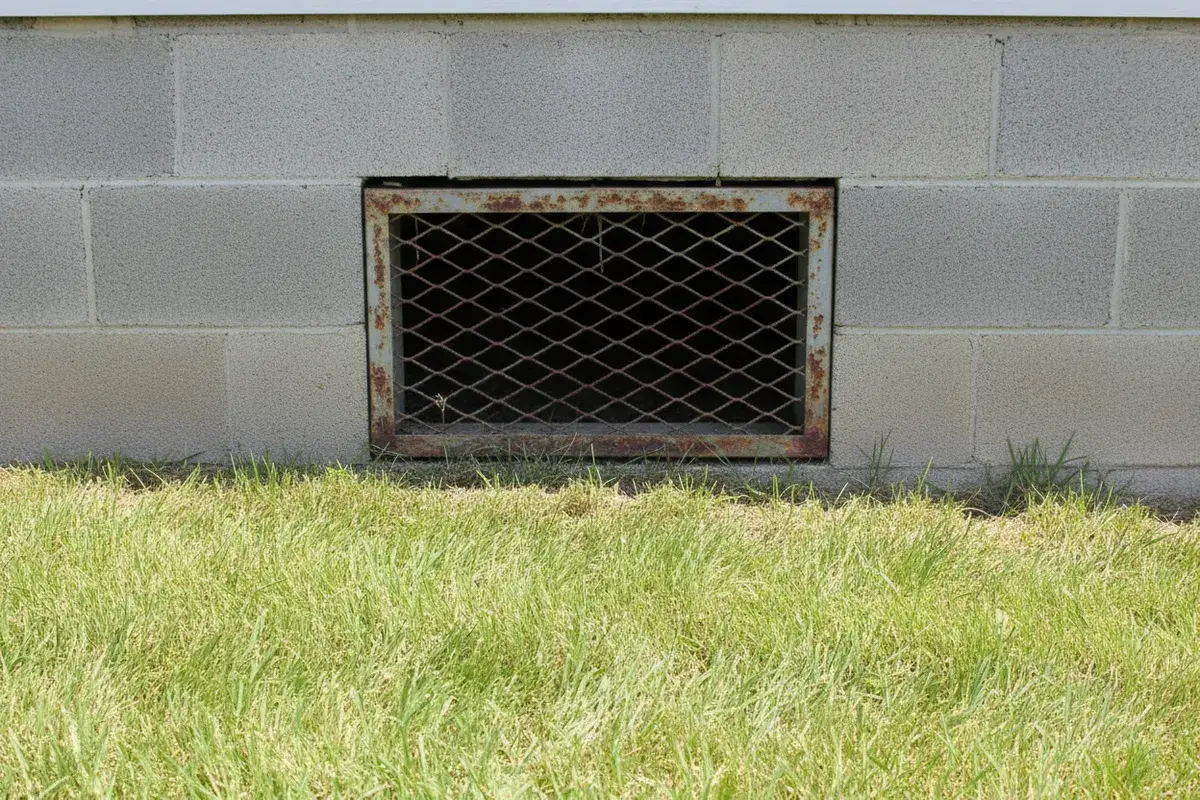
Why do crawl spaces flood every spring?
Snowmelt is the first hit, typically March through May. Water runs off frozen or still-saturated ground because it has nowhere else to go, and it collects against foundations built decades before modern grading and drainage practices. A crawl space with an open vent or a dirt floor takes that water in directly.
West-central Wisconsin's frost line typically runs deep enough that the ground stays frozen or saturated well after the first warm days hit. When snow melts on top of that, the water has nowhere to go but sideways, often straight toward the nearest foundation. A crawl space with a dirt floor and an open vent doesn't stand a chance against that kind of volume, even for a few weeks a year.
Why do crawl spaces get damp again every summer?
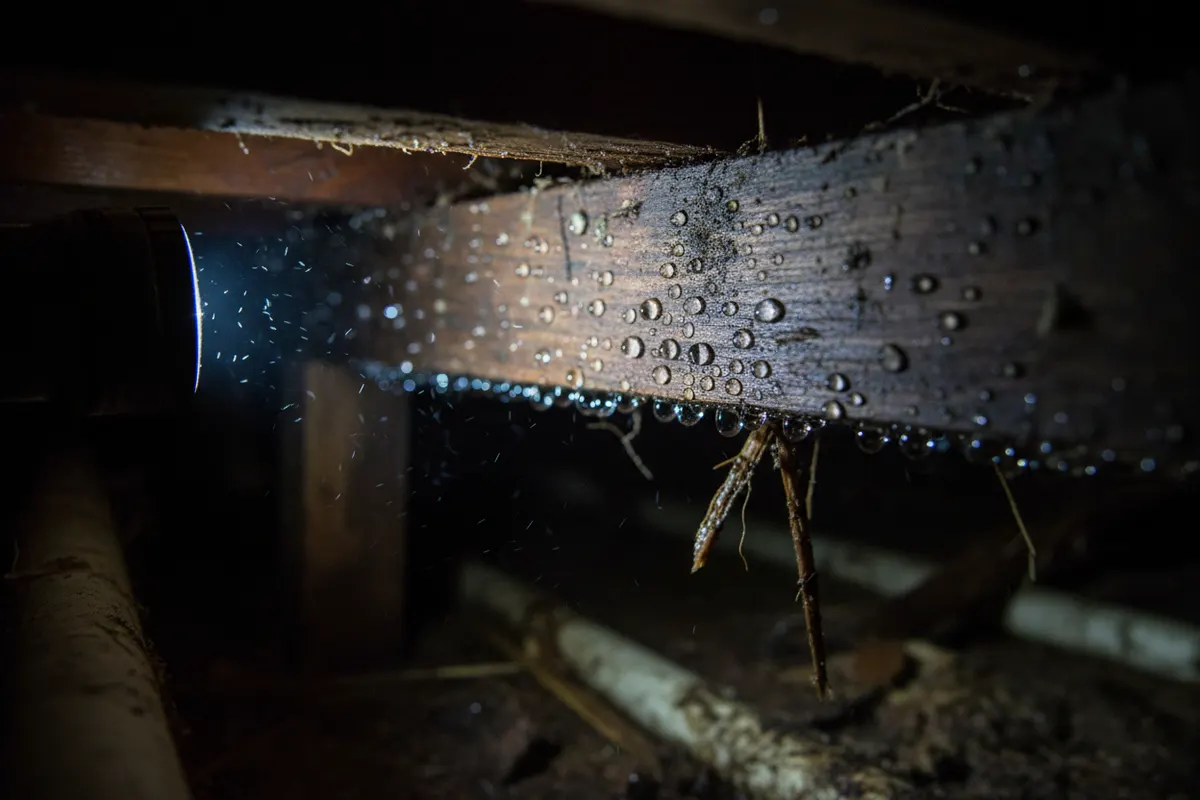
Summer's the second hit, typically June through August. Warm, humid outdoor air moves into the vented crawl space and meets cooler surfaces (foundation walls, floor joists, ductwork) and hits the dew point: the temperature where water vapor turns back into liquid. That condensation soaks wood and insulation all summer, with no rain required.
This is why a crawl space can look bone-dry all winter and still grow mold by August: no water ever had to touch the space directly. It's the same reason a cold glass of lemonade sweats on a humid day. The glass didn't get wet from the inside. The air around it hit its dew point against a cool surface. A crawl space wall or joist does the same thing at scale, all season long.
Why do local soils make the problem worse?
West-central Wisconsin sits on a lot of clay and silt, and both drain slowly. Instead of soaking in and moving away from the foundation, spring meltwater and summer rain sit in the soil next to the house, pushing moisture through foundation walls and dirt crawl space floors longer than sandier soils would allow.
Sandy soil lets water pass through and away from a foundation in hours. Clay and silt hold onto it for days, sometimes weeks, which means the ground next to an Eau Claire foundation can stay saturated well past the point where a sandier lot would already be dry. That extended contact time is what pushes moisture through foundation walls and up through dirt crawl space floors, on top of whatever's coming in through the vents above.
What does Wisconsin code require for a crawl space vapor barrier?
Wisconsin's Uniform Dwelling Code, SPS 322.34, spells out how a vapor retarder has to go in: seams overlapped 6 inches and sealed, with the barrier run 6 inches up the foundation wall. Crawl space work like this generally requires a building permit, and the contractor doing it needs Dwelling Contractor certification under Wisconsin Statute 101.65.
The spec is specific for a reason. A vapor retarder that isn't overlapped and sealed at the seams, or doesn't run high enough up the wall, leaves gaps for moisture to get through anyway. In practice, the requirements break down to:
Seams overlapped at least 6 inches and sealed
Vapor retarder run 6 inches up the foundation wall
Work performed under a permit by a contractor with Dwelling Contractor certification (Wis. Stat. §101.65)
A contractor who can quote that spec back to you, unprompted, is usually one who's done the work under an actual building inspector.
What this means for your house
If your home was built anywhere near 1974 and you've noticed a musty smell, cold floors, or damp soil under the house after snowmelt, the pattern above is probably happening under your feet right now. A crawl space inspection is the fastest way to find out exactly what's going on and get a written scope before anyone quotes you anything. If encapsulation is already on your mind, the encapsulation page covers what the full fix includes.