 Eau Claire Crawlspace
Eau Claire Crawl Space Dehumidifier Installation
Right-sized dehumidifiers that keep crawl space humidity under control all year, installed by licensed local pros.
Do I need a crawl space dehumidifier in Wisconsin?
Yes, in most cases. Summer humidity condenses on the cool surfaces under your house from June through August, even behind a sealed vapor barrier. A dehumidifier holds that moisture below the level where mold and wood rot start, and it runs on its own once it's set up right.
Here's the mechanism: warm, humid outdoor air meets the cooler air and surfaces of your crawl space and hits the dew point, the temperature where water vapor turns back into liquid. That's condensation, not a leak, and it shows up on foundation walls, floor joists, and ductwork all summer. A vapor barrier stops moisture coming up from the ground. It doesn't stop moisture coming in through the air. That's the dehumidifier's job.
If you already have (or plan to add) a sealed crawl space encapsulation, a dehumidifier is usually the piece that keeps it working through July and August instead of just looking good in April.
What size dehumidifier does a crawl space need?
Sizing runs on square footage and how wet the space already is. A dry, sealed 1,000 square foot crawl space might only need a 30 to 50 pint-per-day unit. A larger space with a history of standing water or an open vent needs more capacity. A local pro measures before recommending a size.
| Crawl space size | Typical capacity |
|---|---|
| Under 1,000 sq. ft., sealed | 30 to 50 pints per day |
| 1,000 to 2,000 sq. ft. | 50 to 70 pints per day |
| Over 2,000 sq. ft. or standing water history | 70+ pints per day, or dual units |
General industry ranges. An undersized unit runs constantly and still loses to summer humidity; an oversized one cycles too often. A licensed local pro measures your actual space before quoting a unit.
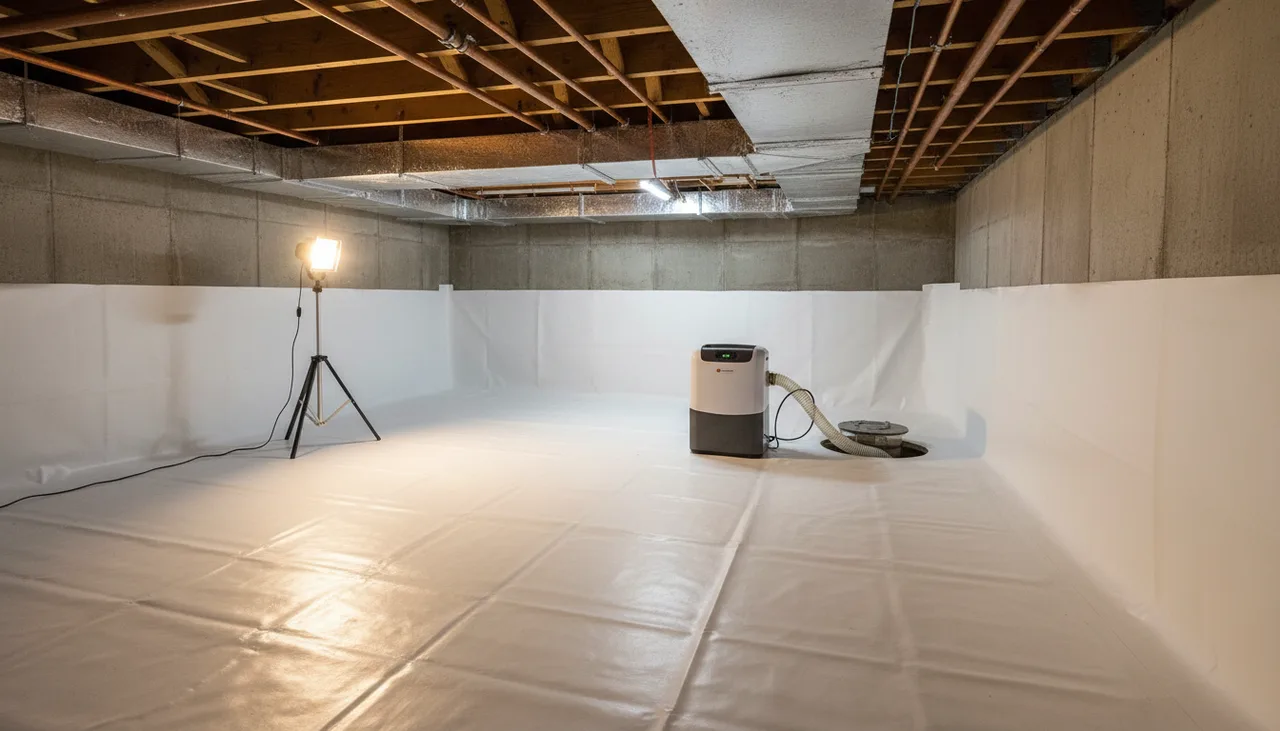
Can crawl space dehumidifier installation be done in winter?
Yes. Dehumidifier installation is interior work, so frozen ground and snow outside don't slow it down. Winter is often the easiest time to get on a contractor's schedule, since exterior drainage and grading jobs pause until spring. If you're dealing with a musty smell in January, there's no reason to wait for warmer weather.
Vapor barriers, sealing, insulation work, and dehumidifiers are all interior jobs. A licensed local pro can install and start running a dehumidifier on a cold January afternoon just as easily as in July, and scheduling tends to open up once the outdoor drainage rush slows down for the season.
Dehumidifier vs. encapsulation alone: what's the difference?
Encapsulation seals the crawl space with a vapor barrier and closed vents, which stops moisture coming from the ground and outside air. A dehumidifier actively pulls existing humidity out of the air, which matters most in summer, even in a sealed space. Local pros usually run both together for a Wisconsin crawl space.
Encapsulation alone
Blocks ground moisture and outside air from getting in. Handles the source. Doesn't remove humidity that's already inside the space.
Encapsulation plus dehumidifier
Blocks the source and actively pulls out any humidity that builds up anyway, especially in June through August.
Starting from scratch? The crawl space encapsulation page covers the full system, liner, sealed vents, and vapor retarder specs included.
How does getting a dehumidifier installed work?
Call or send the short form and tell us what you're seeing. We pass your info to one licensed, insured local contractor who sizes the unit to your crawl space and quotes you directly, no middleman markup and no bidding war for your phone number.
-
01
Tell us what's going on
Musty smell, humidity, or a system you just want sized right. Two minutes by phone or form.
-
02
We connect you with a local pro
One licensed, insured Chippewa Valley contractor who measures before recommending a unit.
-
03
You deal direct
They inspect, size, and quote you straight, with no middleman markup on the work.
Why does Eau Claire's summer humidity hit crawl spaces so hard?
West-central Wisconsin's humid summer air condenses fastest against the coolest surfaces around, and a crawl space under an older home is usually the coolest surface on the property. Add the median Eau Claire home's age (built 1974, with slow-draining clay and silt soils underneath) and the same houses that flood in spring often sweat all summer.
Local knowledge
Read the local guide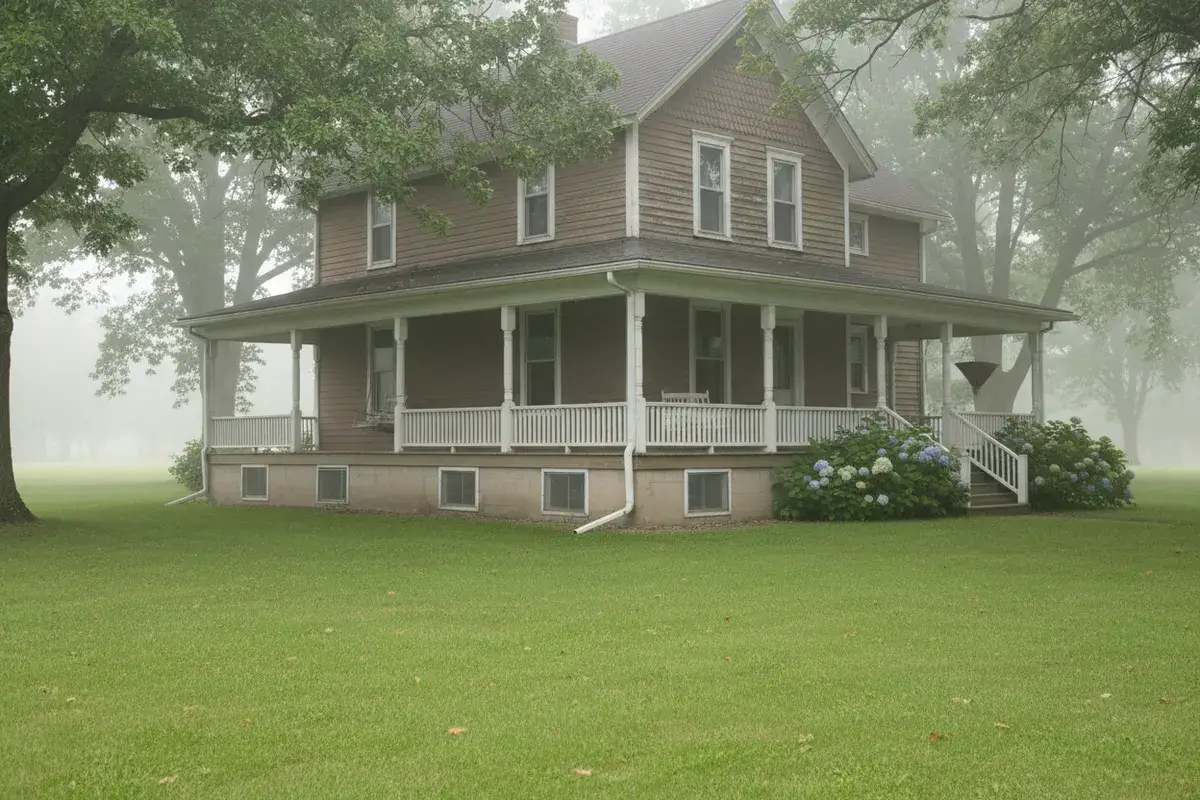
Dehumidifier questions
Do I need a crawl space dehumidifier in Wisconsin?
Yes, in most cases. Summer humidity condenses on the cool surfaces under your house from June through August, even behind a sealed vapor barrier. A dehumidifier keeps that moisture below the level where mold and wood rot start.
Can crawl space dehumidifier installation be done in winter?
Yes. Installing a dehumidifier is interior work, so it isn't slowed by frozen ground or snow outside. Winter is often easier to schedule than spring or summer, when exterior drainage jobs are in higher demand.
More questions answered on the full FAQ page.
Get a free quote from a licensed local pro
Call (715) 500-6083 or send the form. One local contractor, quoting you directly.
By submitting, you agree that Eau Claire Crawlspace may call or text you at the number provided to connect you with a local contractor. No spam, no reselling your info. See our privacy policy.