 Eau Claire Crawlspace
Eau Claire Crawl Space Inspection & Mold Checks
A licensed local pro looks under your house and tells you plainly what, if anything, needs fixing.
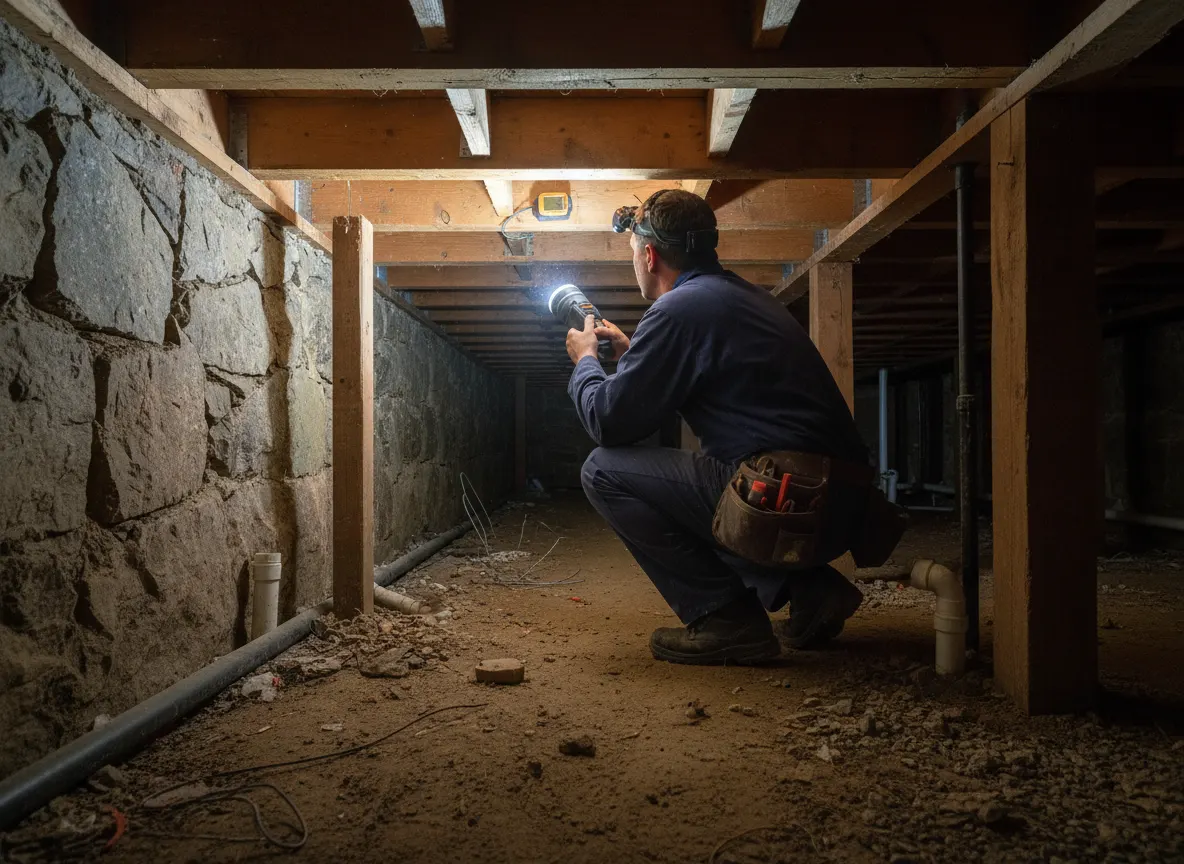
A crawl space inspection is a physical look under the house: moisture levels, mold, the condition of the vapor barrier and insulation, floor joists and framing, and signs of pests. A licensed, insured local contractor does the inspection and gives you photos and a written scope, so you know exactly what you're dealing with: a quick fix, a full repair, or nothing at all. It's the fastest way to answer "is this actually a problem" before anyone quotes you work.
What does a crawl space inspection include?
A licensed local contractor checks moisture levels, looks for mold on wood and insulation, examines the vapor barrier and insulation condition, checks floor joists and framing for rot or sagging, and looks for signs of pests. You get photos and a written scope so you know exactly what, if anything, needs fixing.
The inspection itself doesn't cost you a diagnosis you can't use: the written scope spells out what was found, where, and what it would take to fix, so you can compare that against a quote instead of taking a contractor's word for it. If moisture or mold shows up, the report typically points toward one of two paths: targeted repair for damage that's already happened, or full encapsulation if the vented setup itself is the ongoing problem.
Is mold in a crawl space dangerous?
Mold needs moisture to grow, and a damp crawl space gives it plenty. It's common on wood framing and insulation once humidity builds up. Some people, especially those with asthma or mold allergies, are more sensitive to mold spores than others. The fix that lasts is controlling the moisture that lets it grow. Removing what's visible is only step one.
This is a straightforward building-science fact, not a reason to panic: mold is a byproduct of a moisture problem, and treating the moisture (a sealed vapor barrier, better drainage, a dehumidifier where needed) removes the conditions mold needs to keep coming back. Wiping down visible mold without fixing the humidity behind it is a temporary patch. An inspection tells you which situation you're actually in, and whether it's a cleaning job or a moisture-control job.
Why does my crawl space smell musty?
A musty smell almost always means mold or mildew growing on damp wood, insulation, or soil. In a vented crawl space it gets worse in summer, when humid outside air comes in and condenses on the cooler surfaces under your house. An inspection identifies exactly where the moisture is coming from before anyone quotes a fix.
That condensation cycle, humid air meeting a cooler surface, is the same mechanism behind fogged-up windows in winter, just running under your floor instead of on your glass. It repeats every summer in a vented crawl space, which is part of why the smell often comes and goes with the season instead of staying constant. Our local climate guide walks through why this hits Eau Claire homes twice a year, and if the smell has already led to visible damage, our repair page covers what fixing that damage involves.
Buying or selling a home in Eau Claire?
Fall (September through November) is a common stretch for home purchases and closings to line up in Eau Claire, which makes it a natural time to get a crawl space looked at before it becomes a negotiating point. A pre-listing or pre-closing inspection gives you a written scope to work from instead of a surprise during someone else's inspection.
For sellers, knowing what's under the house before it's on the market means you can fix a small issue quietly or price around it, instead of renegotiating after a buyer's inspector finds it first. For buyers, a crawl space inspection during your option period gives you real information (not a guess) to bring into any conversation about price or repairs before closing. Either way, it's a short visit that removes a lot of uncertainty from a big transaction. Call (715) 500-6083 to get one scheduled.
Crawl space inspection questions
Why does my crawl space smell musty?
A musty smell almost always means mold or mildew growing on damp wood, insulation, or soil. In a vented crawl space it gets worse in summer, when humid outside air comes in and condenses on the cooler surfaces under your house. An inspection identifies exactly where the moisture is coming from before anyone quotes a fix.
Is mold in a crawl space dangerous?
Mold needs moisture to grow, and a damp crawl space gives it plenty. It's common on wood framing and insulation once humidity builds up. Some people, especially those with asthma or mold allergies, are more sensitive to mold spores than others. The fix that lasts is controlling the moisture that lets it grow. Removing what's visible is only step one.
What does a crawl space inspection include?
A licensed local contractor checks moisture levels, looks for mold on wood and insulation, examines the vapor barrier and insulation condition, checks floor joists and framing for rot or sagging, and looks for signs of pests. You get photos and a written scope so you know exactly what, if anything, needs fixing.
More questions answered on the full FAQ page.
Get a free quote from a licensed local pro
Call (715) 500-6083 or send the form. One local contractor, quoting you directly.
By submitting, you agree that Eau Claire Crawlspace may call or text you at the number provided to connect you with a local contractor. No spam, no reselling your info. See our privacy policy.